Young children learn about food best through play, not lectures. The short answer for parents: let kids see, touch, name, sort, draw and help prepare food in a relaxed way, and keep mealtimes free of pressure. Over time, curiosity grows into familiarity, and familiarity makes children more willing to try new things.
This guide shares practical, playful ways to explore food with children aged 3 to 8, from kitchen jobs and sorting games to coloring and drawing activities, with ideas for each age group.
Why Play Works Better Than Pressure
Many parents know the feeling: you put a new vegetable on the plate, and it comes back untouched. Pushing ("just one more bite") often makes children more resistant, not less.
Play changes the situation. When a child colors a carrot, sorts toy fruit by colour or washes potatoes at the sink, food becomes something interesting rather than something they are told to eat. There is no "right answer", so there is nothing to refuse.
A helpful way to think about it is that exposure counts, even when it does not end in eating. Looking at a food, smelling it, talking about it and drawing it are all small steps towards feeling comfortable with it.
Start With Names, Colours and Shapes
Before children decide whether they like a food, they first need to know it. Naming foods, talking about their colours and describing their shapes builds vocabulary and confidence.
Food naming games
- What's in the bag? Put a fruit or vegetable in a cloth bag. Your child feels it and guesses what it is.
- I spy at the market. On a trip to the shop or market, play "I spy something green and round" or "something long and orange".
- Food alphabet. Older children can try to name a food for each letter: apple, banana, carrot, date and so on.
Rainbow sorting
Collect fruit and vegetables (real or pictures) and sort them by colour: red tomatoes and apples, orange carrots and papaya, yellow bananas and lemons, green peas and cucumbers, purple eggplant and grapes. Talk about which colours you ate today and which are missing.
This is also a gentle way to practise early math: which colour group has the most? Can you line them up from smallest to biggest?
Bring Food Into Art Time
Art is one of the easiest ways to explore food without any pressure to eat it.
Coloring food pictures
Coloring pages of fruits, vegetables and everyday foods let children study shapes and details closely. While coloring, ask simple questions: "What colour is a ripe banana? Have you seen a green one? What is inside a papaya?"
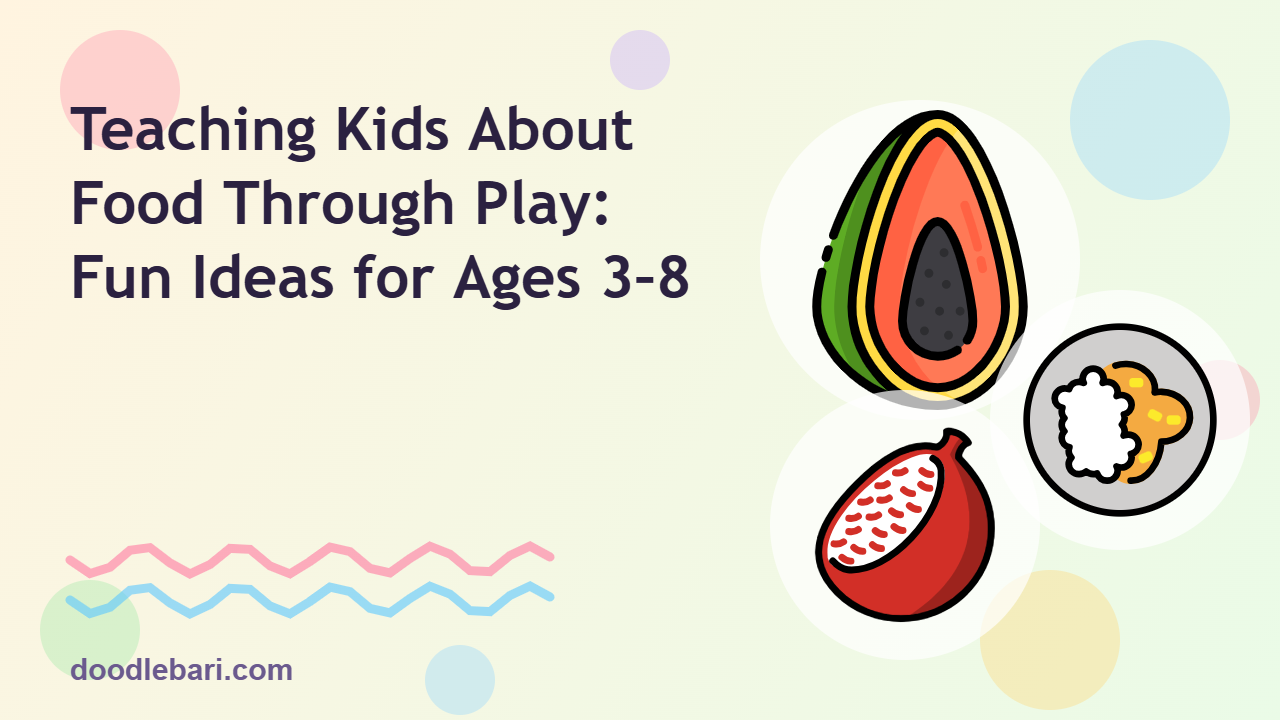
Doodlebari has free coloring pages across three food categories: Fruits (now including papaya, guava, fig, dragon fruit and pomegranate), Vegetables, and Food for cooked and baked dishes such as a bowl of rice, curry and rice, a round loaf of bread, pie and a honey pot. Children can tap to fill each picture, which works well even for three-year-olds.
Draw your plate
Give your child a paper plate and crayons and ask them to draw a meal they would like to eat. Talk about what they chose. Is there something from the garden, something warm, something crunchy? There are no wrong answers; the aim is conversation.
Fruit and vegetable printing
Cut a few vegetables in half (an apple, a potato, a pepper or an okra) and dip them in paint to make prints. Children are often surprised by the shapes inside: a star in an apple, rings in an onion. These surprises spark questions and curiosity.
Little Helpers in the Kitchen
Helping to prepare food is one of the most powerful ways to build interest. Children are often proud to taste something they have made themselves.
Safe kitchen jobs by age
Ages 3–4
- Washing fruit and vegetables in a bowl of water
- Tearing lettuce or spinach leaves
- Stirring cold mixtures
- Putting things in a bowl or on a tray
- Pressing cookie cutters into soft bread
Ages 5–6
- Peeling a banana or a boiled egg
- Spreading butter or soft cheese with a blunt knife
- Measuring with cups and spoons
- Cracking eggs (with practice and some mess)
- Arranging fruit on a plate in a pattern
Ages 7–8
- Cutting soft foods with a child-safe knife, with supervision
- Reading a simple picture recipe
- Grating cheese or carrot carefully
- Helping plan a simple meal
- Setting the table and serving
Always supervise children around heat, sharp tools and appliances, and choose tasks that match your child's abilities.
Explore Where Food Comes From
Children love knowing the story behind what they eat.
Grow something small
Even without a garden, you can grow herbs, spring onions or beans on a windowsill. Watching a seed sprout and grow gives children a real connection to food.
Visit a market or farm
Markets are full of colours, smells and sounds. Let your child choose one new fruit or vegetable to bring home and explore. Ask the seller where it grows if you can.
Food from around the world
Pick a country or region and explore one simple dish together. In Bangladesh, you might talk about rice, lentils, fish and seasonal fruits like mango, jackfruit and guava. Coloring a bowl of rice or a guava picture can be a fun start to a conversation about family meals and traditions.
Make Mealtimes Calm and Positive
Play builds curiosity; calm mealtimes let it grow.
- Offer, don't force. Put a small amount of a new food next to familiar foods, and let your child decide whether to try it.
- Eat together when you can. Children learn a lot by watching adults enjoy a variety of foods.
- Use neutral language. Instead of "good" and "bad" foods, talk about foods that help us grow, foods that give us energy, and treats we have sometimes.
- Be patient. Many children need to see a food several times before they feel ready to taste it.
- Keep portions small. A small amount looks less overwhelming.
If you have concerns about your child's eating, growth or a possible allergy, talk to your doctor or a qualified health professional.
Frequently Asked Questions
At what age can children start helping in the kitchen?
Many children enjoy simple jobs like washing vegetables or stirring cold food from around age 3, with close supervision. As they grow, you can add more complex tasks such as measuring, spreading and later cutting soft foods.
My child refuses to try new foods. What can I do?
Keep offering small amounts without pressure, and give your child many low-stakes ways to explore food: shopping, helping prepare, coloring and talking about it. Children are often more willing to taste foods they feel familiar with.
Are food coloring pages really useful?
Yes, as one part of a wider approach. Coloring food pictures builds vocabulary, attention to detail and conversation about food, all without any pressure to eat.
How can I talk about treats without making them "forbidden"?
Use calm, neutral language. Explain that some foods are "sometimes foods" and others are "everyday foods". Including treats occasionally and without fuss helps avoid making them seem extra special.
Keep It Playful
Learning about food is a long, gentle journey that happens bit by bit, at the market, at the kitchen counter, on the art table and around the family meal. Keep it fun, follow your child's curiosity and celebrate small steps.
For a relaxed start, explore Doodlebari's free coloring pages: pick a fruit like the new papaya or dragon fruit, or a dish like curry and rice, and talk about it while your child colors.